
The village of Castleton developed as a planned settlement in the 12th century with the arrival of the Normans and the building of Peveril Castle to house guests for hunting in the Royal Forest of the Peak.
A number of interesting and informative articles have been written by members of the CHS on the history of the Village covering such diverse subjects as eighteenth century murders, medieval tournaments, the Ancient Garland Ceremony and Brigantia, the goddess of the Celtic tribe which inhabited a site on Mam Tor. These articles are available by clicking the links below and more will be added as new articles become available so keep visiting to explore more of Castleton’s history.

Carved head, dating from about 1000BC & believed to be Brigantia, the Celtic fertility god, which was found in a garden wall. The image has been adopted as the CHS logo.
The Brigantes and the Mam Tor Settlement
Over 3000 years ago a “splinter group” of Celts left their tribe in Northumbria and came to Mam Tor where they built their settlement, enclosing about 16.5 acres within double earthworks. Some of these earthworks are still clearly visible on the north east side of Mam Tor.
A Tournament at Peveril Castle
Knights from all parts of the country compete for the hand of the beautiful daughter of William Peveril.
The Hospital of the Blessed Mary of Castleton in the Peak
“Early documents give an fascinating insight into life at the hospital … John, Duke of Lancaster, confirmed the grant … by which he gave to the warden of the hospital pasture for a mare and its foals and eight oxen …”
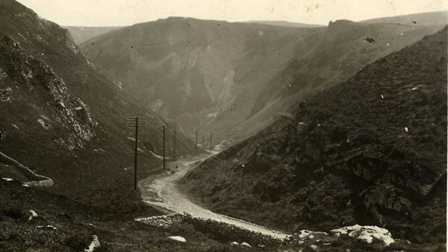
“In 1758 and young gentleman and lady came out of Scotland on an expedition and were robbed and murdered at a place called the Winnats, near Castleton. News” 28 April 1788.
Their bones were found in 1768 by some miners sinking an engine pit. …” From the Derby News” 28 April 1788.
Schools and Schooling in Castleton: 1687 -1863
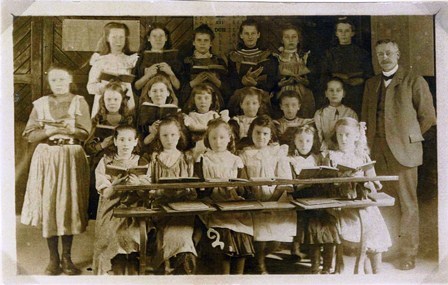
The Bagshawe family of “The Oakes” at Norton, Sheffield were the pioneers of schooling in Castleton. The photo shown is of Castleton School, probably in 1912, with Frank Eyre as headmaster.
Castleton School Days Remembered by Joe Hallam
Joe was born in Castleton in 1909 and lived all his life in the Village, moving house only once. These are his memories of the village school.
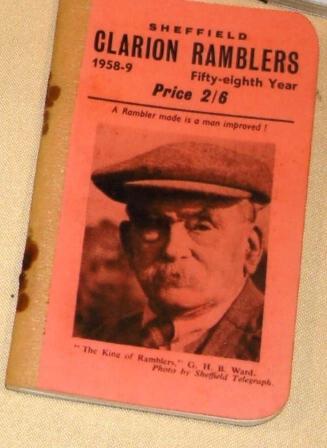
George Herbert Bridges Ward: Rambler Extraordinaire
George Herbert Ward (Bert) was born in Sheffield in 1876. He believed that land should be free for all to enjoy lawfully and campaigned successfully for access to huge tracts of land in the Peak District. He was awarded an honorary MA degree by Sheffield University in 1957.
“No man could have worked more tirelessly for the preservation and accessibility of our countryside heritage and especially of the incomparable Peakland. No man … could have done more … to foster the true spirit of rambling.” Sheffield University Public Orator.
Castleton’s Squire: Robert How Ashton Junior
Follow the link above for the story of the man affectionately known as “Squire Ashton”.
Randolf Douglas and the Douglas Museum
As Randini, Randolf Douglas performed as an escapologist but he is also remembered as the creator of the Douglas Museum, acclaimed as a “cabinet of curiosities”, a “House of Wonders”. Follow the link above to read his full story.
Memories of the Douglas Museum is a fascinating reminiscence of Randolf Douglas by a young neighbour who describes his home and workshop where he created miniature objects for the Museum.
Bottled Carbonated Mineral Water or ‘Fizzy Drinks’
Read on to find out where the term ‘Codd’s Wallop’ comes from and what is has to do with fizzy drinks.
Tallow Candles
Why were tallow candles stored in wooden or metal boxes hung high up on the wall? Follow the link above to find out more about this forgotten trade.
 Castleton Historical Society